Ubisoft’s Masterwork Open-World RPG
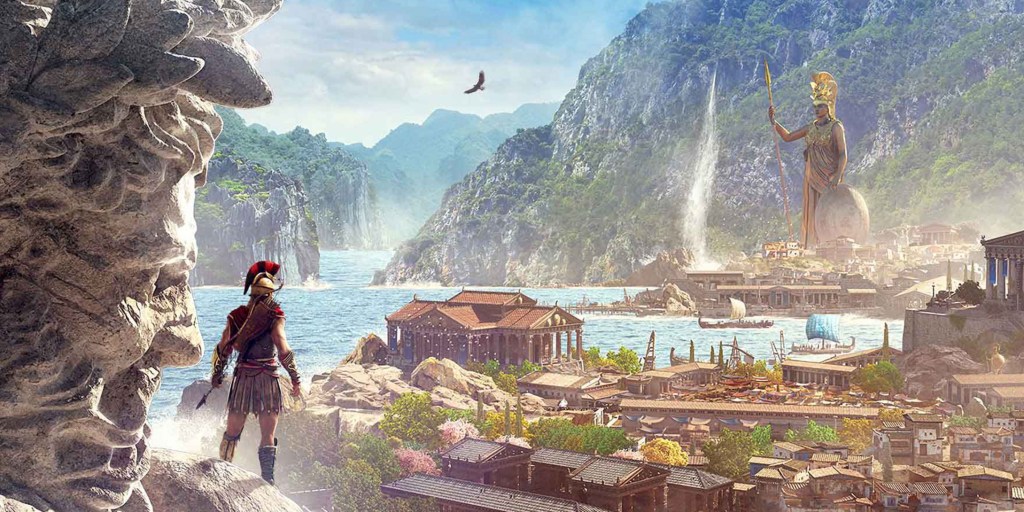
So, I’m a bit late to review Assassin’s Creed Odyssey, seeing as the game came out in 2018. In my defense, I purchased the game upon its release, and despite really loving it, quickly got overwhelmed by the sheer amount of content. For a single player RPG, Odyssey feels like diving into an MMORPG for the first time. Alas, seven years later, I have completed a full play through, and although I have a lot to praise, this isn’t exactly a review, but more of a retrospective, regarding how the game has aged, and an examination of how I’d like to see its features implemented elsewhere.
I’ll start by saying Ubisoft games get a ton of flack in 2025, and this isn’t unfair. I haven’t researched the more recent Assassin’s Creed games much, but I understand the pain of seeing one of the world’s biggest studios continue to release seemingly incomplete or strangely incompetent products year after year.
It seems like, in a way, Assassin’s Creed Odyssey suffers from its franchise title. As is always the case with a long-running IP, Assassin’s Creed fans have passionate views on how the game is meant to be played, and the open-world freestyle of Odyssey is vastly different than the streets of Renaissance Italian cities the franchise saw its golden age in. There’s a significant pool of franchise fans who either seem to think the game is too big or too unfamiliar. If this were a standalone Ancient Greek adventuring game, these factors of expectation wouldn’t work against its perception in the same way.
With all of that being said, this game has generally positive reviews and responses from fans, and it deserves them. It’s ambitious, but it doesn’t skimp on details, with an enormous map that feels consistently alive in every corner. The combat offers what one would expect from the Assassin’s Creed franchise, as well as standard RPG gameplay that keeps the somewhat redundant quest system from ever getting dull. The stories and missions can feel repetitive at times, but the variation of location and characters completely negates this factor.

One of my favorite aspects of the game is its involvement of choices in the narrative. There are plenty of great RPG games with moral choices, but they don’t always appeal to me in the same ways. My favorite video game of all time is Fable 2, as its morality scale didn’t exactly factor into the story, but into the sandbox elements of the game. You could steal, kill, or interact with NPCs in other negative ways to decrease your morality, or complete quests and save people to increase it. These micro choices allowed for a sense of freedom that I really loved, and even games like The Witcher 3, that allow for compelling moral decisions, don’t satisfy it in exactly the same way. In Odyssey, the choices you make change the world around you. This is what I mean about it feeling alive.
If you kill an NPC or steal, someone will place a bounty on you, and bounty hunters will come try and kill you. If you kill Spartans, Athenians have the opportunity to take ground in the region. The dialogue choices in quests can lead to different outcomes or character fates. The world constantly evolves around you in a manner that envelops the player inside of it, and it’s no wonder why gamers can sink countless hours into it.
To me, this is the ideal, open-world sandbox game formula: A massive map filled with diverse, detailed areas. A political system with leaders and automatically generated characters that keeps the world moving. A bounty system that ensures that, even if you elude enemies, they will find you. Goals related to practical and aesthetic customization of your character. A variety of missions, sidequests, and auto-generated jobs that provide different gameplay opportunities depending on the player’s current desires.
The game isn’t perfect, and even with all of the praise, I still had some negative takeaways: Assassin’s Creed Odyssey’s main characters are passable, but they’re not anywhere near as special as other iconic video game leads, or even other Assassin’s Creed franchise characters. Odyssey’s supporting and minor characters are well-written, but the limited capacity of the game’s character models makes it hard for them to standout visually. Odyssey’s equipment and skill customization don’t add as much variability to playstyle as other RPG games. Aside from a few exceptions, adding new character skills doesn’t feel like it contributes much to gameplay. This is likely to keep gameplay consistent with other Assassin’s Creed titles. The same goes for Odyssey’s economic system, which isn’t as dynamic as the rest of the world.
I can appreciate the Assassin’s Creed franchise and Ancient Greek history and mythology, but playing this game really just made me wish for an open-world game with similar functions in the Game of Thrones or Lord of the Rings world. It’s insane that Warner Bros. hasn’t capitalized on either franchise in that way yet. The Middle-earth games nearly got there with brilliant, dynamic functionality, but they didn’t have the scale I’m talking about. Someday, perhaps.